The Truth About White Buffalo
Thought of by many as turquoise, it's technically not. It was originally called "White Buffalo Turquoise" by the family who found it — not for what it's made of, but for where it was found: at the far edge of a turquoise vein. The name stuck, the way names do, and the confusion came with it.
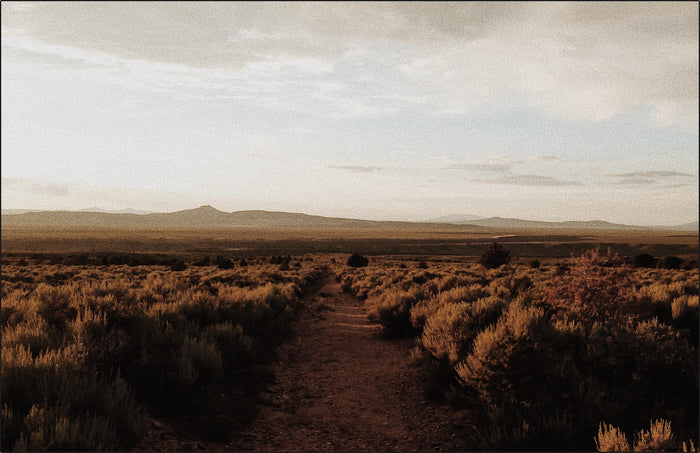
It surfaced around 1993 on the Otteson family's claim outside Tonopah, Nevada, at the tail end of their Dry Creek turquoise vein. To this day that stretch of high desert is the only known source of it anywhere in the world — so every stone carries a little of that one piece of ground with it.
What it actually is comes down to chemistry. Turquoise draws its blue-green from copper. White Buffalo has none — no copper, no color — so it stays chalk-bright white. Its primary mineral is calcite, which can take the form of dolomite or aragonite depending on how it crystallizes. Running through the white is a dark chert matrix: the black webbing that gives the stone its drama and, conveniently, polishes as cleanly as turquoise does.
That contrast is the whole appeal. Most turquoise is prized for its color; White Buffalo is prized for the absence of it — white and black, almost nothing in between, like a photographic negative of the stones it grew up beside. Material pulled from deeper in the vein can carry a faint breath of green or blue, or a golden-brown matrix, but the classic stone is stark and clean.
That's the truth about White Buffalo: it isn't turquoise, and it never needed to be. A white stone, from a single vein in the Nevada desert — rare on its own terms, and unlike anything else.